AI Agents Are Now Priced on Results. Are You Ready?
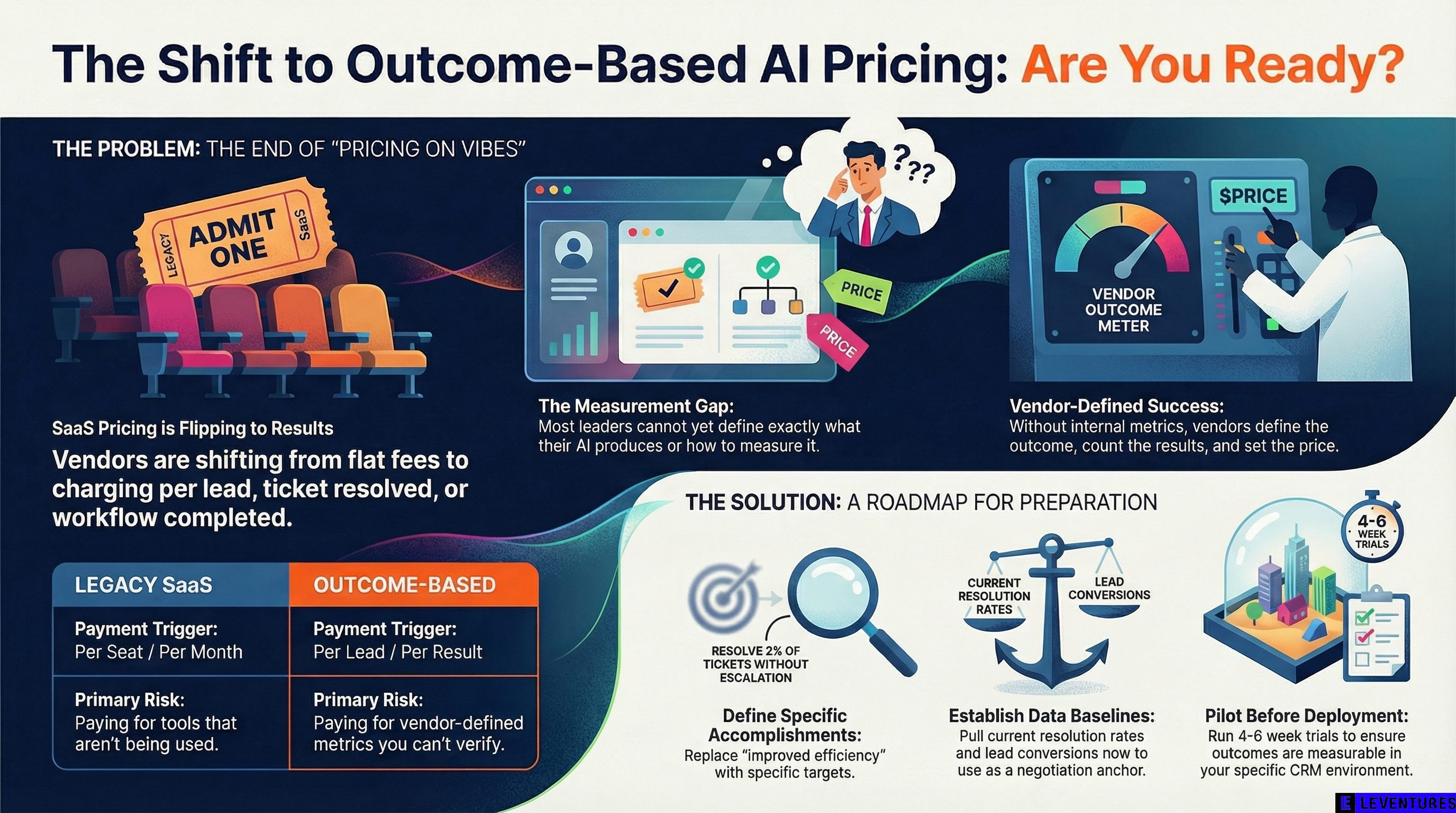
HubSpot just started pricing their Breeze AI agents on outcomes - not seats or subscriptions. You pay when the agent actually does something measurable.
Sounds great. But if you can’t define what “results” means for your AI tools, you’re about to get priced on someone else’s definition.
What Changed
HubSpot’s Breeze agents now cost based on what they accomplish - leads generated, tickets resolved, workflows completed. Not a flat fee.
This flips the SaaS model. Instead of paying whether you get value or not, both sides have to agree on what success looks like.
HubSpot has hundreds of thousands of customers. When they move, Salesforce, Zendesk, Intercom, and Microsoft follow. The question is when, not if.
The Problem This Exposes
Can you say exactly what each AI tool in your stack produces and how you measure it?
Most leaders can’t. AI adoption happened in “let’s see what this does” mode. Tools saved time in ways that are real but fuzzy. That was fine when pricing was flat.
Outcome-based pricing ends that. If Breeze charges per qualified lead, you need to know your baseline, your expected conversion rate, and what a lead is worth. Without that, you can’t tell if you’re getting a deal or getting taken.
Worse - the vendor defines the metric, the vendor counts the outcomes, and you write the check.
Three Things to Define Now
1. What the AI is supposed to accomplish. Not “improve efficiency.” Something specific. Reduce first-response time from X to Y hours. Resolve Z percent of tickets without escalation. If you can’t define this for a tool you’re already paying for, you’re probably not getting full value from it.
2. Your baseline numbers. Pull them now - ticket volume, resolution rates, lead conversion, time-to-close. When vendors switch pricing, you’ll need these to negotiate and audit.
3. Whether you’re actually measuring it. “Qualified leads from AI” sounds simple until you realize your CRM doesn’t tag sources consistently and nobody agreed on what “qualified” means. If your data can’t support outcome measurement, the pricing model will punish you.
How to Structure for This
Start with the metric, then pick the tool. Most companies do it backwards - adopt a tool, then retrofit a justification.
Build measurement into implementation from day one. Set up reporting on resolution rate, escalation rate, and handling time before the agent goes live.
Run a 4-6 week pilot before full deployment. Confirm that outcomes are measurable in your environment, not just in the vendor’s demo.
Get outcome definitions in writing. Define how outcomes are counted, who counts them, and what happens when there’s a dispute. Negotiate this upfront, not after integration.
What This Means
Outcome-based pricing rewards companies that know what they want and can verify they got it. It punishes companies buying AI on vibes.
The businesses that get ahead of this won’t just manage costs better. They’ll have better AI implementations because they were forced to define what good looks like.
Not sure your AI stack could survive outcome-based pricing? Le Ventures offers a free audit - map each tool to what it actually produces, check your baselines, and get a clear picture of where you stand.